
Reduce manual reconciliation before it turns into permanent operational drag.
When teams spend hours comparing exports, the problem is usually not reporting—it is a lack of trustworthy workflow movement and unified record context. APIWORX reduces manual reconciliation by keeping records aligned and exceptions visible as they happen.
 Open live demo
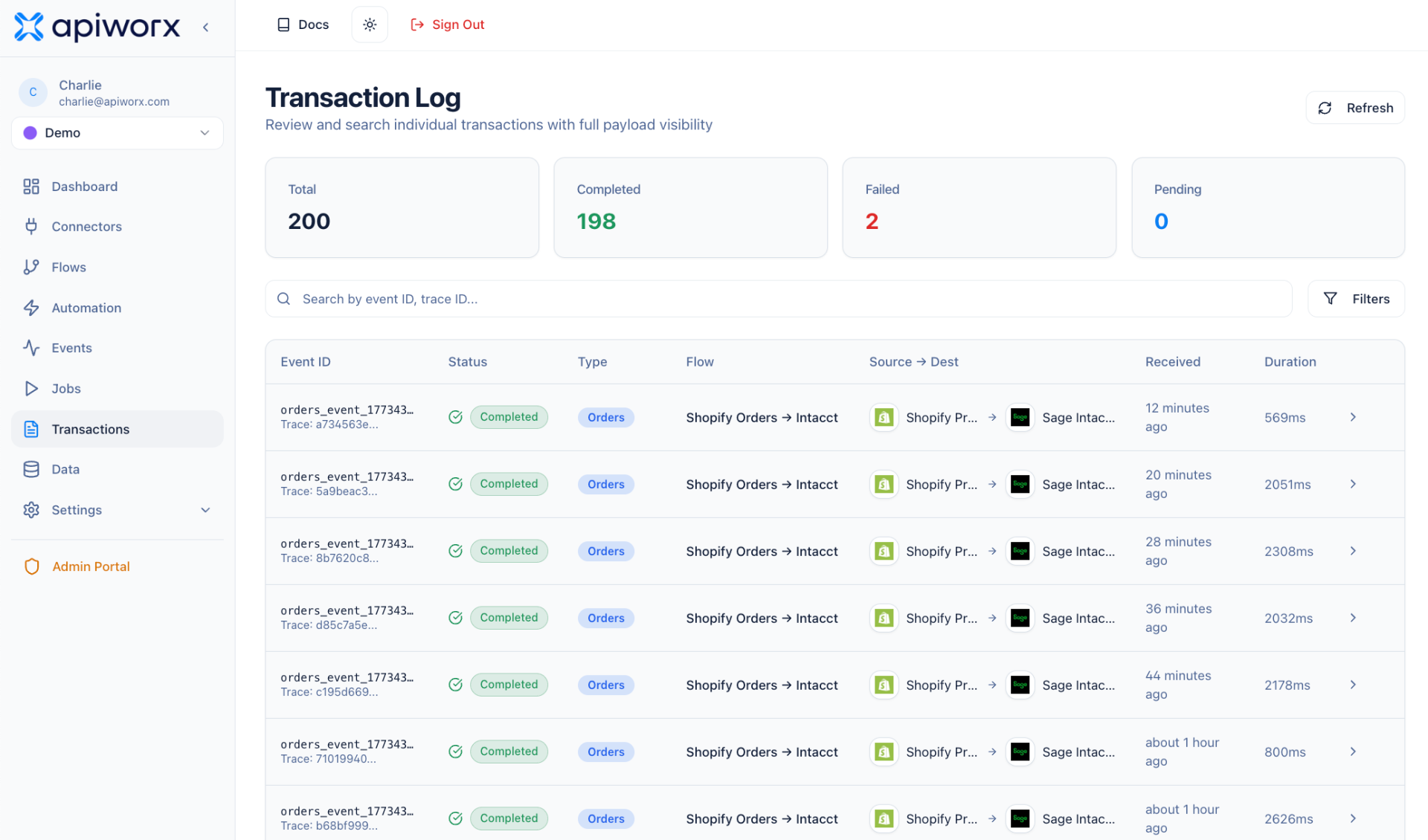
Unified transaction context shortens the path from exception detection to reconciliation resolution.
Why teams end up firefighting this
Manual reconciliation is a symptom of operational mistrust. Teams check order counts, inventory balances, payment totals, and shipment states manually because they cannot rely on the systems to stay aligned or explain failure when they do not.
How the workflow runs in production
Each stage is mapped, monitored, and tied back to the business records teams actually care about.
What improves when the workflow is controlled
Where teams usually lose time
These are the common failure patterns that trigger spreadsheet work, support noise, and downstream fire drills.
Open live demo
APIWORX connects exceptions back to the exact execution stage, affected records, and system responses so remediation starts with evidence instead of guesswork.
Related paths through the platform
Use-case pages should connect back to the broader platform story, not sit as isolated leaf pages.
Questions operators ask before they commit
Will this eliminate all reconciliation work?
No system removes all reconciliation, but APIWORX reduces the repetitive manual checking caused by silent failures, data drift, and fragmented operational context.
Talk to an architectWhat kinds of reconciliation does it help with?
It is especially strong for order, inventory, shipment, payment, refund, and invoice alignment across connected systems.
Talk to an architectWhy is apiworx.data important here?
Because reconciliation gets easier when teams can inspect a unified operational entity instead of manually comparing disconnected exports.
Talk to an architect