Offshore Integration Developer Risks: The Hidden Cost of Cheap Integration in 2026
Offshore integration developer risks explained: SOC 2 fraud, GDPR Article 28 liability, IP exposure, and the 10-point vendor due-diligence checklist every operations leader should run before signing.

> TL;DR: Integration developers hold persistent, real-time access to your ERP, storefront, 3PL, customer PII, and financial records — simultaneously. Offshore "body shops" and fraudulent SOC 2 audit mills have made cheap integration the highest-risk vendor decision most operations leaders make. This guide explains the four risk vectors (SOC 2 fraud, GDPR Article 28, IP enforcement, credential sprawl) and gives you the 10-point checklist to verify before you sign.
Key takeaways
- Integration vendors get more sensitive access than almost any other category — and most of it is never revoked.
- The Delve scandal proved fraudulent SOC 2 audits are now an industrial-scale problem; ~494 companies were affected in a single case.
- GDPR Article 28 makes you, the data controller, primarily liable for your processor's failures. The fine lands on you.
- IP agreements are only worth what you can enforce in your vendor's jurisdiction.
- A real due-diligence process verifies AICPA accreditation, US legal entity, E&O insurance, and DPA scope — not just a PDF certificate.
Your Shopify store connects to NetSuite. NetSuite connects to your 3PL. Your 3PL connects to your customer portal. Every one of those connections was built by a developer — and that developer still has the keys.
Most operations leaders spend weeks vetting their fulfillment partners and thirty minutes deciding who gets access to their entire technology stack. That imbalance is where breaches begin, GDPR fines are earned, and IP ends up in jurisdictions you cannot reach.
This is a warning about offshore integration developer risks that most companies only understand after something goes wrong.
Integration Developers Are Not Like Other Vendors
A website developer builds you something and largely steps away. An integration developer does not.
They require persistent, real-time access to your production systems — your ERP, your storefront, your 3PL connections, your authentication tokens, your customer PII, your financial records, and your proprietary business logic. Simultaneously. Every day, for as long as the integration runs.
No other vendor category carries this exposure. Your accountant sees your financials. Your logistics provider handles your inventory. Your integration developer sees all of it — and they have programmatic credentials that can be used silently, at scale, with no visible footprint.
A single integration developer on Upwork with access to your Shopify, your NetSuite instance, and your customer database is a single point of catastrophic failure. Not a theoretical one. A documented, recurring one.
The risk calculus on cheap offshore integration talent is not about code quality. It is about what you are surrendering in exchange for a low hourly rate.
The SOC 2 Fraud Epidemic Is Worse Than You Think
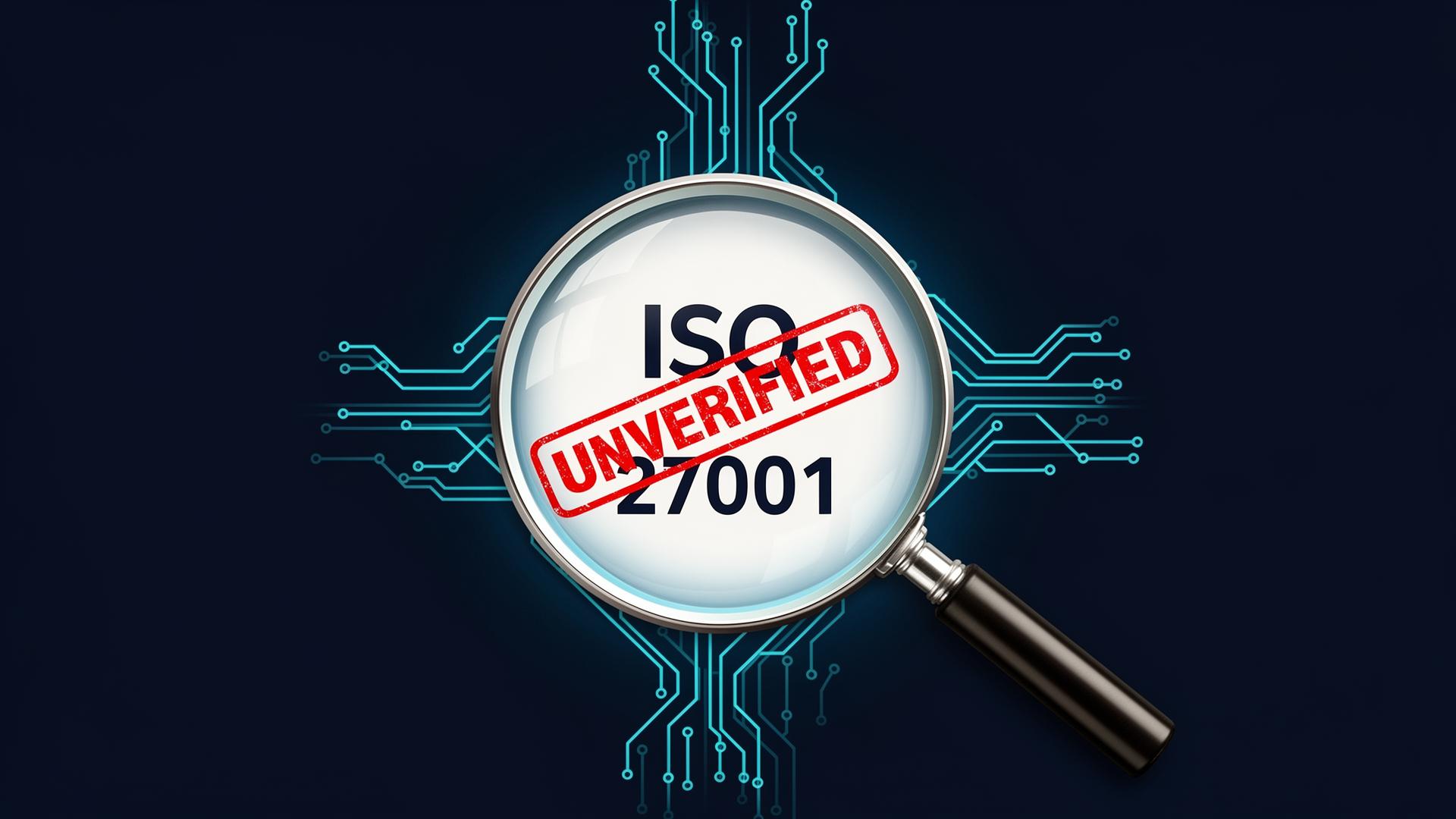
In March 2026, Delve — a Y Combinator-backed startup that raised $32 million — was exposed for systematically faking SOC 2 audit reports for 494 of its clients. The evidence was not subtle: a leaked Google spreadsheet showed 99.8% identical boilerplate language across all 494 reports, language that had been pre-written before any client data was ever submitted.
The "US-based auditors" Delve claimed to use traced to Indian certification mills — specifically Accorp, Glocert, and DKPC — operating through empty US shell companies and mailbox agents with no genuine auditing capacity.
The downstream effect: over 400 companies may now be holding invalid SOC 2 certifications. More critically, those invalid certifications may expose affected organizations to criminal liability under HIPAA and GDPR fines — because they relied on fraudulent compliance documentation when signing data processing agreements.
Delve is not an isolated case. It is the case that got caught.
The offshore compliance-as-a-service market has produced vendors who know exactly what documentation operations leaders ask for — and know most will never verify it against the AICPA audit register. They hand you a certificate with an American-sounding name, you sign the contract, and you own every consequence that follows.
If your current integration vendor has a SOC 2, ask yourself: have you verified the auditing firm is AICPA-accredited? Have you confirmed the audit was conducted by a licensed CPA with a real US business address — not a mailbox on a Regus floor? If the answer is no, you have the same exposure as Delve's 494 clients.
GDPR and CCPA Liability Flows Directly to You
European regulators are not interested in your vendor's excuses. They are interested in your signature on the data processing agreement.
GDPR Article 28 is unambiguous: when you appoint a data processor (any vendor that touches EU citizen data), you are legally required to ensure that vendor provides sufficient guarantees of compliance — and you are expected to audit those guarantees. If they fail, the fine is yours. The vendor's liability to regulators is secondary.
This is not hypothetical. Vodafone Germany was fined for failing to properly oversee contracts drawn up by third-party agencies — the vendor relationship itself was the basis for the fine. Meta was fined €1.2 billion in 2023 for transferring European user data without adequate protection. TikTok received a €530 million fine in 2025 — approximately $600 million — for transferring EU citizen PII to servers in China. Across 2,245+ enforcement actions, total GDPR fines have exceeded €5.65 billion.
CCPA carries the same structural logic: California imposes liability on businesses for their vendors' data handling, not just their own.
Now apply that to your integration vendor. They have access to your customer PII. If they are processing EU citizen data through servers in a non-adequate jurisdiction — and most offshore developers are — you are in breach. If they lack the contractual data protection guarantees GDPR Article 28 requires, you are in breach. If you cannot demonstrate you audited them, you are in breach.
An offshore developer with no US legal entity, no errors-and-omissions insurance, no genuine SOC 2, and no AICPA-accredited auditor cannot fulfill GDPR Article 28's requirements as a matter of law. The contract you signed with them is not compliant. Which means the contract you signed with your European customers is also exposed.
IP Agreements Are Only Worth What You Can Enforce
Federal indictments for IP theft are up 99% in recent years. Criminal arrests are up 39%.
In February 2026, three Silicon Valley engineers were indicted for stealing trade secrets from Google and transferring confidential data to Iran. They were contractors who exploited the access privileges their roles required.
Every integration developer has the same access profile. They need your business logic, API credentials, schema, and data structures. Everything that makes your operation run — proprietary workflows, pricing logic, customer segmentation rules — they touch it.
Any IP agreement is only as enforceable as your ability to litigate in the vendor's jurisdiction. If your developer is based in Vietnam, Cyprus, or India, you cannot practically pursue an IP claim without extraordinary legal resources and likely no recovery even if you prevail.
Domestic developers with US legal entities, US insurance, and US assets can be compelled to perform. An offshore developer who has transferred your API logic abroad cannot.
The "It's Just Upwork" Delusion
Operations leaders who would never allow an unvetted contractor physical access to their warehouse will hand a developer on a freelance platform root-level credentials to their ERP without a second question.
The reasoning is usually: "They have good reviews." "It's a small project." "We'll change the passwords when they're done."
Most integration credentials are never actually rotated. The access persists because revoking it breaks the integration. The developer you hired two years ago for a "small Shopify connector" likely still has working API keys to your production environment right now.
Upwork provides no background checks, no credential verification, and no enforcement mechanism if something goes wrong. The platform's terms disclaim responsibility for anything that happens in the contractor relationship. Every risk sits entirely with you.
What to Actually Verify Before Signing
Due diligence on an integration vendor is not asking them to send you their SOC 2 PDF. It is verifying that SOC 2 against the issuing firm's AICPA registration, confirming the audit scope covers your specific systems, and reviewing the audit letter — not just the certificate.
It means a US legal entity with verifiable registration, errors-and-omissions insurance with a US carrier, and a data processing agreement that satisfies Article 28's specific enumerated requirements.
It means knowing where your data physically resides during development and testing, not just in production.
Before You Sign: The Vendor Due Diligence Checklist
Use this before executing any integration vendor contract:
- SOC 2 Type II (not Type I) certificate verified — auditing firm confirmed as AICPA-accredited with a real US address and licensed CPA of record
- Audit scope confirmed — covers the specific systems your integration touches (ERP, eCommerce, 3PL, payment data, customer PII)
- US legal entity verified — Secretary of State registration confirmed, not a virtual office or mailbox address
- Errors and omissions insurance confirmed — certificate of insurance from a licensed US carrier, with your company named as additional insured
- Data processing agreement reviewed — satisfies GDPR Article 28's specific contractual requirements if any EU citizen data is involved
- Data residency confirmed — all development, staging, and production environments documented by geography
- Credential access protocol documented — explicit process for provisioning and revoking access at project close
- IP assignment agreement reviewed by US counsel — not a template clause, an executed agreement with enforceable jurisdiction
- Background check or personnel vetting policy confirmed — especially for team members with production system access
- Reference verification completed — references contacted directly, not just provided by the vendor
The Standard You Should Actually Expect
The list above is not aspirational. It describes what a professionally operated integration vendor produces without hesitation — because they have already built those controls into how they operate.
Vendors who cannot produce this documentation should not have production credentials to your systems. The cost of a breach — legal fees, regulatory response, customer notification, remediation — dwarfs whatever you saved on the hourly rate.
Integration infrastructure is the connective tissue of a modern operation. It deserves the same procurement rigor as any other critical vendor. For a deeper view of what enterprise-grade integration architecture looks like, see why operations leaders choose APIWorx, our security and compliance posture, and the APIWorx platform architecture.
Frequently Asked Questions
What are the biggest risks of using offshore integration developers?
The four biggest offshore integration developer risks are: (1) fraudulent or unverified SOC 2 certifications, (2) GDPR Article 28 liability that flows back to you as the data controller, (3) unenforceable IP and confidentiality agreements in foreign jurisdictions, and (4) credential sprawl — production API keys that are never rotated and remain valid for years after a project ends.
Is a SOC 2 certificate enough proof that an integration vendor is safe?
No. A PDF certificate is not verification. A legitimate SOC 2 Type II requires an independent audit by an AICPA-accredited CPA firm with a real US business address. You should verify the auditing firm against the AICPA registry, confirm the audit scope covers the systems your integration touches, and review the full audit letter — not just the badge or summary.
Who is liable under GDPR if my integration vendor mishandles data?
You are. GDPR Article 28 places primary responsibility on the data controller (you) to ensure your processors (your integration vendor) provide sufficient guarantees of compliance and to audit those guarantees. Vodafone Germany, Meta, and TikTok have all been fined for vendor-related data handling failures. Total GDPR fines have now exceeded €5.65 billion across more than 2,245 enforcement actions.
What should I verify before hiring an integration developer or platform?
At minimum: a verified SOC 2 Type II from an AICPA-accredited firm, a US legal entity with Secretary of State registration, errors-and-omissions insurance from a US carrier, a GDPR Article 28-compliant data processing agreement, documented data residency, a written credential provisioning and revocation process, an enforceable IP assignment, personnel vetting policies, and direct (not vendor-supplied) reference checks.
Are integration platforms safer than hiring an offshore freelance developer?
Generally yes — when the platform is operated by a US legal entity with verifiable compliance, named enterprise customers, and a documented security posture. A platform like APIWorx centralizes credentials, audits access, and absorbs platform updates as part of the service, eliminating the credential-sprawl and accountability gaps that come with freelance contractors.
If you want to see what compliant, verifiable integration infrastructure looks like in practice, see why operations leaders choose APIWorx — or book a free assessment and we will return a written integration plan within 24 hours.
See the APIWORX platform in action
Tell us about your systems and we'll build a tailored automation plan within 24 hours.
Talk to an expert