Brightpearl and Southeast Asian Marketplaces: What's Missing | APIWORX
Brightpearl doesn't natively support Shopee, Lazada, or Temu. Here's how brands selling in APAC are handling marketplace connectivity.

For brands expanding into APAC, marketplace coverage becomes an operational question very quickly. Shopee, Lazada, and Temu are not optional edge channels in that region. They are often central to growth.
That is where many teams discover a Brightpearl limitation: the platform's marketplace model is much stronger in its legacy core channels than in Southeast Asian marketplace operations.
The APAC marketplace gap
Brightpearl is well known for its Shopify and Amazon alignment, but that does not automatically translate into readiness for APAC marketplace expansion. Shopee and Lazada bring different workflows, data patterns, settlement behaviors, and operational urgency.
For cross-border sellers, the integration gap usually shows up in three places:
- Marketplace order ingestion into ERP or OMS
- Accurate inventory broadcasting across multiple live channels
- Settlement and reconciliation logic that finance can actually trust
If the platform cannot support those reliably, the team ends up managing APAC expansion manually.
Why this matters for modern brands
Shopee, Lazada, and Temu have changed the shape of international commerce. They matter because they unlock volume, customer acquisition, and regional reach. But they also add operational pressure quickly.
The moment a brand sells across APAC marketplaces, the integration layer has to become region-aware, channel-aware, and finance-aware. A system built around a narrower channel map often struggles to keep up.
What an APAC-ready stack looks like
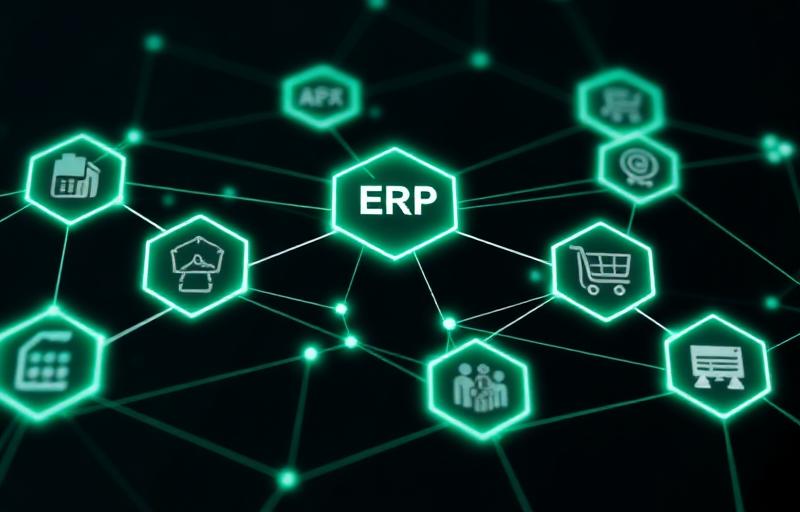
An APAC-ready commerce stack does not just connect marketplaces to a storefront. It connects them into the real operating backbone:
- ERP for revenue and inventory control
- WMS or 3PL systems for execution
- Customer and product records for data consistency
- Finance systems for settlement and margin clarity
That broader integration model is usually more important than the marketplace connector alone.
How APIWORX approaches marketplace connectivity
APIWORX is designed to connect the full commerce-to-ERP data loop, including marketplace-driven operations. For brands selling in APAC, that means the integration layer can normalize marketplace demand and keep it aligned with inventory, fulfillment, and accounting instead of treating the channel like an isolated workflow.
That is why brands looking at Shopee and Lazada often move away from the question, “Does the platform list the marketplace?” and toward the real question, “Can the business operate confidently once volume hits?”
Honest verdict
If APAC is not part of the roadmap, Brightpearl's limitations here may not matter much. If Shopee, Lazada, or Temu are central to growth, they matter a great deal. At that point, a broader integration strategy usually becomes necessary.
FAQ
Does Brightpearl support Shopee or Lazada natively?
Not in the way growth-stage APAC brands usually need. Support is limited enough that many teams rely on additional tooling or a different integration model.
Why are Shopee and Lazada hard to bolt onto a legacy retail stack?
Because marketplace behavior, settlement, inventory timing, and regional operational patterns create requirements that older channel models often do not handle well.
What does APAC-ready marketplace integration require?
It requires dependable order, inventory, product, fulfillment, and financial data movement between marketplaces and the rest of the operating stack.
Talk to us about your marketplace stack → Brightpearl alternatives and Brightpearl migration guide.
See the APIWORX platform in action
Tell us about your systems and we'll build a tailored automation plan within 24 hours.
Talk to an expert